BEZIEHUNG
im Künstler
im Museum
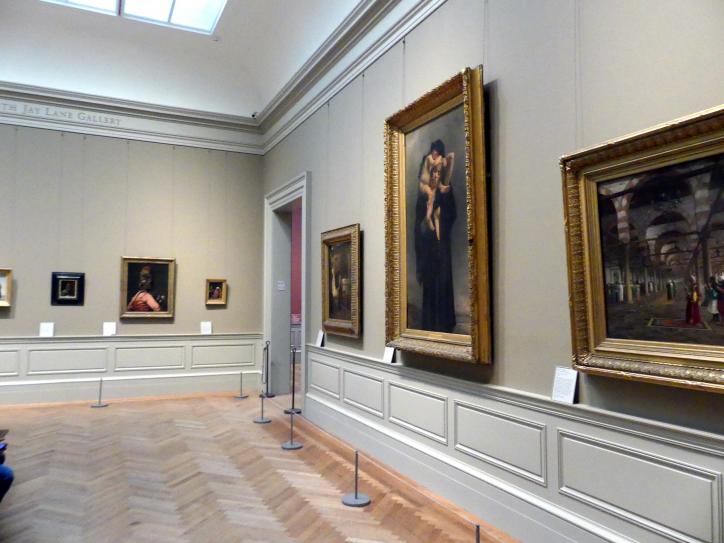
Ägyptische Bäuerin mit ihrem Kind
1869–1870
New York, Metropolitan Museum of Art (Met), Saal 804 (Inventar-Nr. 87.15.97)
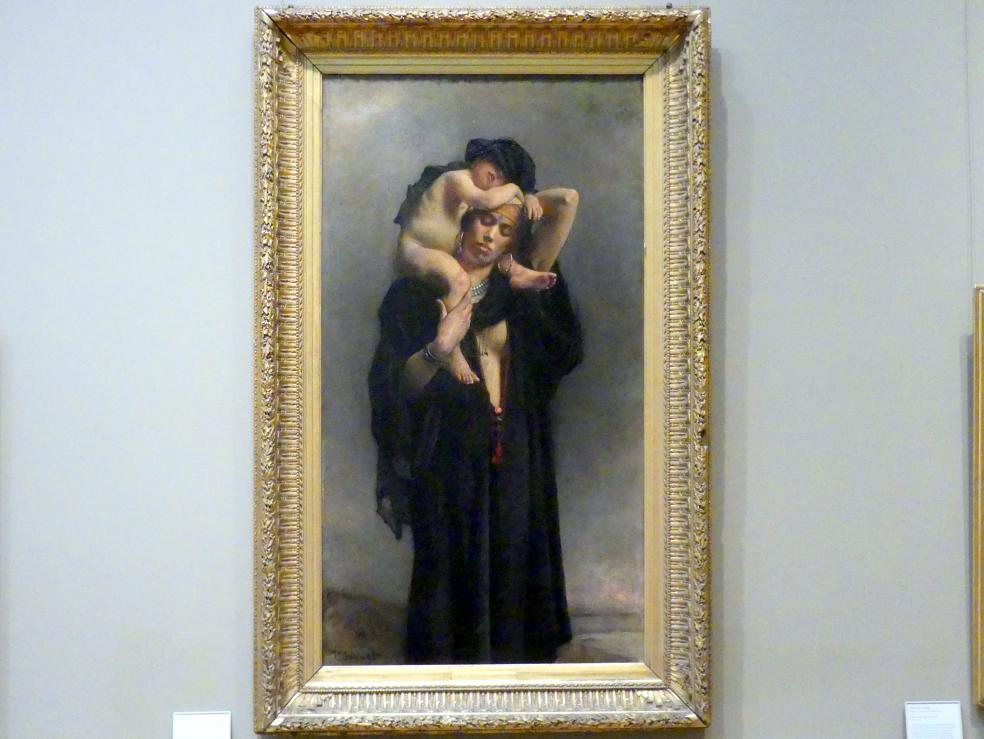
Bonnat soll diese Bäuerin und ihr Kind aus dem Leben studiert haben, als er 1869 anlässlich der Eröffnungszeremonie des Suezkanals in Ägypten war. Das Gemälde wurde im darauffolgenden Jahr im Pariser Salon gelobt und erneut, als es erstmals in New York ausgestellt wurde im Jahr 1876. Als Catharine Lorillard Wolfe das Bild dem Metropoliten vermachte, galt es als „ein wahres und lebendiges Porträt zweier klar verwirklichter Individuen [mit] wunderbarer Würde, Nüchternheit, Stärke und Schönheit“. Zu diesem Gemälde gibt es eine vollständige Ölstudie im Musée Bonnat, Bayonne.
Bonnat is said to have studied this peasant woman and child from life while he was in Egypt for the opening ceremony of the Suez Canal in 1869. The painting was praised at the Paris Salon the following year and again when it was first exhibited in New York in 1876. When Catharine Lorillard Wolfe bequeathed the picture to the Metropolitan it was deemed "a true and vital portrait of two clearly realized individuals [with] a wonderful dignity, sobriety, strength, and beauty." There is a full-length oil study for this painting in the Musée Bonnat, Bayonne.